
Stickpack Machines & Automatic Stick Pack Packaging Machinery
Stickpacks provide a compact and convenient packaging format for accurately portioned powders, granules, liquids, gels and other suitable products.
Their narrow, elongated format makes them particularly useful for single-dose and single-use applications where manufacturers need controlled portions in packaging that is easy to store, transport, open and use.
E&B supplies automatic stickpack machinery for a wide range of production requirements, from flexible systems for manufacturers introducing automated packing through to multi-lane solutions designed for higher production outputs.
We work with manufacturers to understand the product, required dose, packaging material, production targets and wider packaging process before helping identify an appropriate stickpack solution.
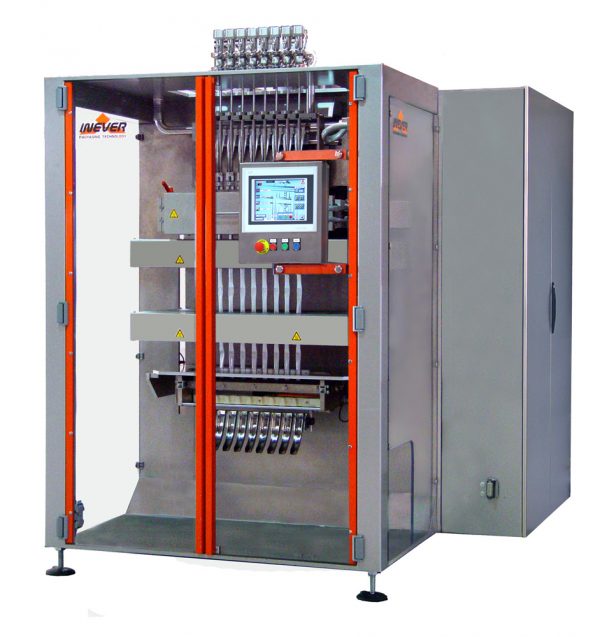
What Is a Stickpack Machine?
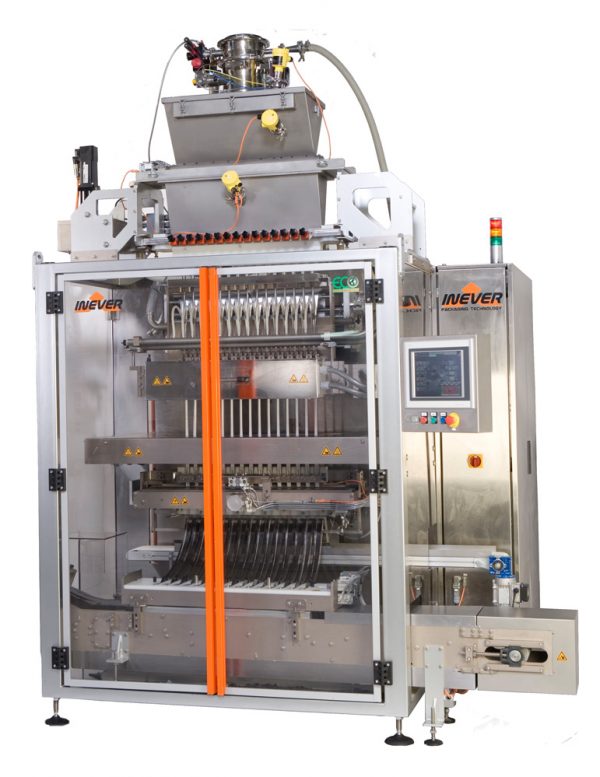
A stickpack machine automatically forms, fills and seals narrow flexible packs containing a measured quantity of product.
Flexible packaging material is fed into the machine and formed into the characteristic elongated stick shape. The required quantity of product is dosed into each stick before the pack is sealed and separated.
Depending on the machinery and application, multiple sticks can be produced simultaneously using multi-lane technology.
This makes automated stickpack machinery particularly suitable for manufacturers requiring consistent, portion-controlled packaging at increasing production volumes.
What Products Can Be Packed in Stickpacks?
An ASRS is a warehouse automation solution that automatically stores and retrieves products from designated storage locations. Rather than relying solely on forklift trucks or warehouse operatives, products are moved using automated cranes, shuttles, lifts or other handling equipment, all controlled through intelligent software.
The result is a warehouse that operates more efficiently, makes better use of available space and provides greater control over stock movements. Modern ASRS solutions integrate with WMS, ERP software and other automated handling equipment to create a connected warehouse operation.
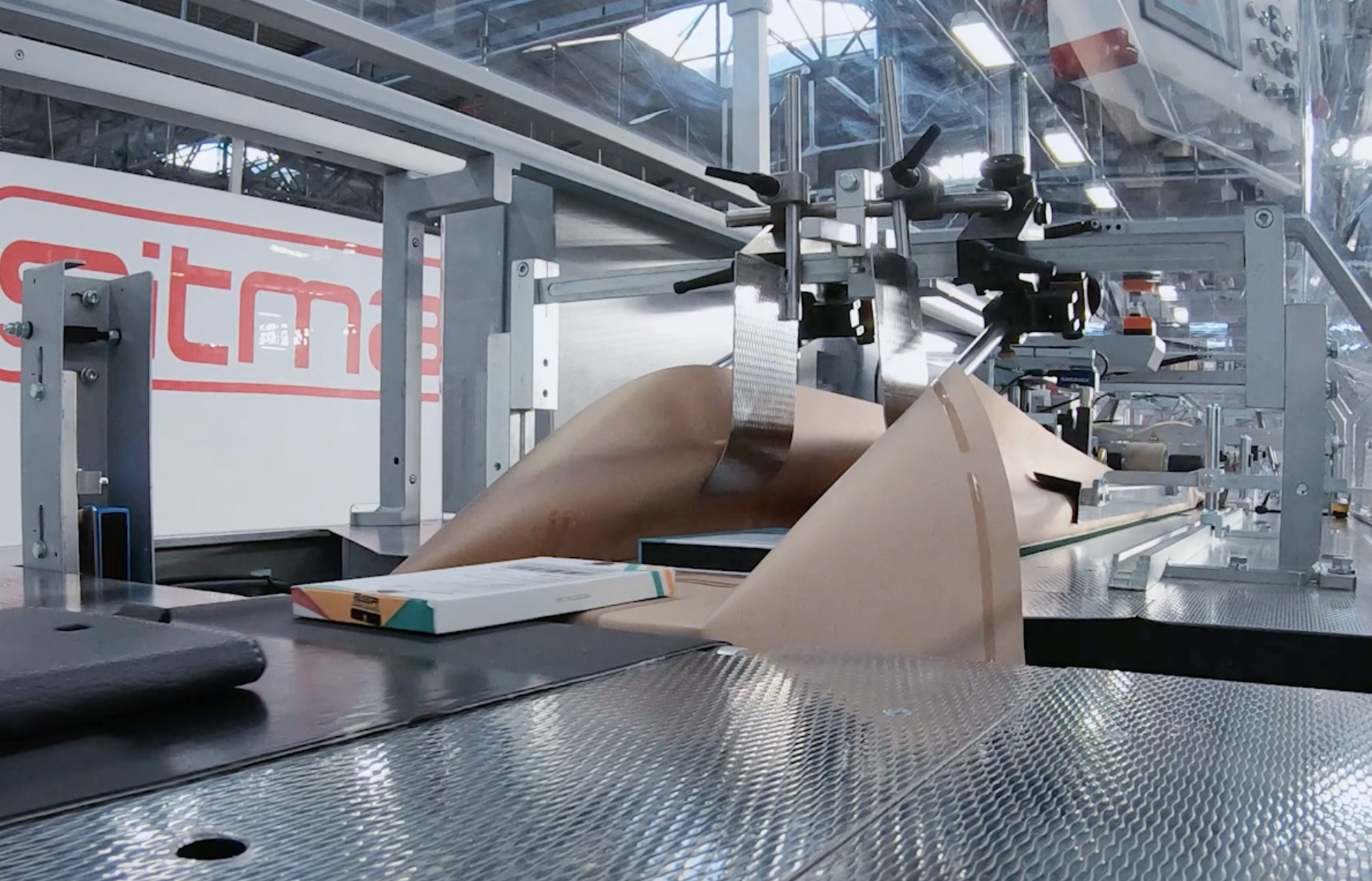
What Products Can Be Packed in Stickpacks?
The appropriate machine and filling technology depend heavily on the characteristics of the product being packed.
Powders
Powders are a common stickpack application because the format provides a convenient way of creating controlled individual portions.
Applications can include powdered drinks, nutritional products, supplements, food ingredients, flavourings and other suitable powdered products.
Product density, flow characteristics and the required dose all need to be considered when specifying the filling system.
Granules
Free-flowing granular products can also be packaged into individual stickpacks.
The required dose, granule dimensions, product behaviour and production speed will influence the appropriate machine and dosing configuration.
Liquids and Gels
Stickpacks can provide a convenient single-use format for suitable liquids and gels.
For these applications, factors such as viscosity, fill accuracy, packaging material and seal integrity become particularly important when selecting the machinery.
Why Use Stickpack Packaging?
Stickpacks can offer several advantages where manufacturers require convenient individual or controlled portions.
Convenient Single Portions
The narrow format is easy to carry, store and dispense, making stickpacks particularly useful for products intended to be consumed or used as an individual dose.
Efficient Use of Packaging Material
Depending on the application, the compact format can reduce the amount of flexible packaging material required compared with some alternative portion-pack formats.
Compact Packaging
Stickpacks occupy relatively little space, which can provide benefits during storage, secondary packaging and transportation.
Accurate Portion Control
When combined with an appropriate dosing system, automated stickpack machinery can consistently fill predetermined quantities of product.
Flexible Presentation
Pack dimensions, packaging materials and printed designs can be selected around the product and intended application, subject to compatibility with the machinery.
Multi-Lane Stickpack Machines
Multi-lane production is an important feature of many automated stickpack systems.
Rather than producing one pack during each machine cycle, packaging material can be divided across several lanes, allowing multiple stickpacks to be formed, filled and sealed simultaneously.
This can provide considerably greater production output without requiring multiple standalone packaging machines.
The appropriate number of lanes depends on factors including:
Required production output
Required dose
Available production space
Stick width and length
Downstream packaging requirements
Product characteristics
Filling technology
More lanes do not automatically mean a better solution.
E&B can help establish a configuration that provides an appropriate balance between production output, flexibility, available space and the wider packaging process.
Stickpack filling and dosing systems
Reliable stickpack production depends on selecting filling and dosing technology appropriate to the product. A fine powder, free-flowing granule and viscous liquid behave very differently during the filling process and therefore require different considerations.
Product consistency
Flow characteristics
Particle size
Product density
Viscosity
Required dose
Fill accuracy
Hygiene requirements
Cleaning requirements
Production output
E&B therefore considers the characteristics of the product alongside the packaging requirements before identifying an appropriate machinery solution.
Automatic stickpack packaging solutions
Stickpack machinery can be configured around a wide range of production requirements, from relatively compact automated systems through to multi-lane machinery designed for significantly higher outputs.
The appropriate solution depends on more than production speed.
Pack dimensions, required dose, product characteristics, filling technology, packaging material and available production space all influence the machine configuration.
For manufacturers moving away from manual or semi-automated processes, a stickpack machine can provide an opportunity to increase consistency and output without necessarily introducing a complete automated packaging line immediately.
Higher-volume manufacturers may instead require multi-lane production combined with downstream counting, collating, cartoning and case packing.
E&B can help identify the level of automation appropriate to the application today while also considering how production requirements may develop in future.
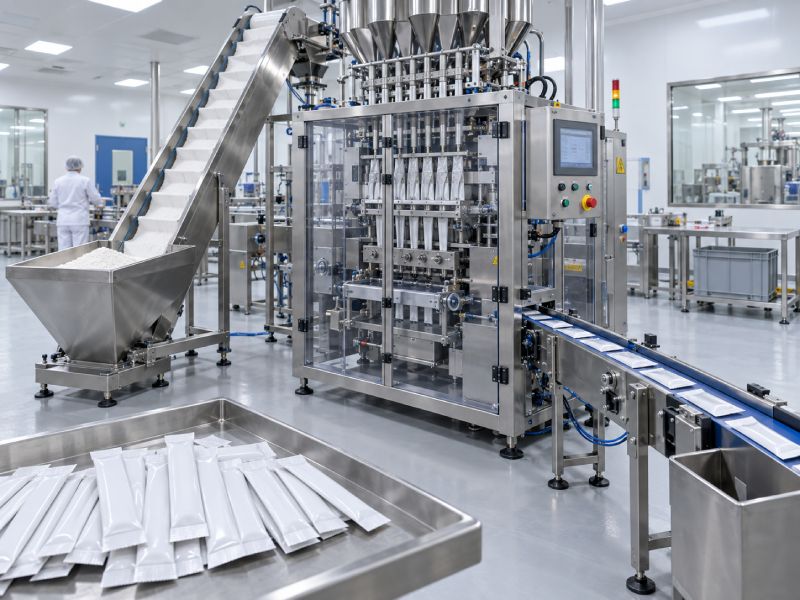
Industries using stickpack packaging machinery
Stickpacks are used across a variety of sectors where controlled portions and convenient individual packaging are required.
Food & Beverage
Applications can include powdered drinks, flavourings, seasonings, ingredients and suitable liquid products.
Nutritional Products & Supplements
Powdered nutritional products and supplements can be particularly well suited to stickpack packaging where consumers require a predetermined quantity for each use.
Pharmaceutical & Healthcare
Suitable pharmaceutical and healthcare products can benefit from controlled portions and individually sealed flexible packaging. Machine specification should reflect the particular hygiene, regulatory and production requirements of the application.
Cosmetics & Personal Care
Stickpacks can provide a useful format for samples and controlled quantities of suitable cosmetic, gel and personal-care products.
Household & Technical Products
Suitable liquid, powder and granular products can also be considered for stickpack packaging where an individual measured quantity is required.
Stickpacks vs sachets – what's the difference?
Stickpacks and sachets are both flexible portion-pack formats, but there are important differences between them.
Stickpacks are generally narrow and elongated. This makes them particularly suitable for controlled individual portions and products intended to be poured, dispensed or used in a single application.
Sachets are typically wider and flatter and can accommodate a broader range of pack shapes, product quantities and presentation requirements.
Neither format is inherently better. The appropriate choice depends on:
The product
Required dose
How the customer will use it
Pack dimensions
Packaging material
Filling technology
Required production output
Branding and presentation requirements
E&B supplies machinery for both formats, allowing the application to determine the most appropriate packaging technology.
Integrating stickpack machinery with secondary packaging
For higher-volume applications, producing the individual stickpack may only be the first stage of the packaging process. Individual sticks may subsequently need to be counted, collated and loaded into cartons before moving into case packing and palletising.
Considering these downstream processes when specifying the stickpack machinery can help prevent production bottlenecks as output increases.
E&B’s wider packaging machinery portfolio means these requirements can be considered as part of the overall production process rather than treating the stickpack machine in isolation.
Cartoning stickpacks automatically
Where stickpacks are sold in multipacks, automated cartoning can reduce the manual handling involved in counting, collating and loading individual packs.
Depending on the application, stickpacks can be grouped into the required quantity and automatically introduced into a suitable carton before progressing to downstream case packing.
E&B supplies horizontal and vertical cartoning machinery as part of its wider packaging portfolio, allowing secondary packaging requirements to be considered alongside the primary stickpack process.
For manufacturers looking to increase production capacity, considering both processes together can help create a more coherent automated packaging line.
Sustainable stickpack packaging
The relatively narrow format of a stickpack can help minimise the amount of packaging material required for an individual portion compared with some larger flexible packaging formats. However, material reduction is only one consideration when assessing packaging sustainability.
Manufacturers considering alternative or recyclable flexible materials also need to assess:
Product protection
Barrier requirements
Seal performance
Machinability
Production speed
Material thickness
Shelf-life requirements
Production waste
Compatibility with the proposed machinery
Changing packaging materials can affect forming, filling and sealing performance, so the material and machinery should be considered together rather than as completely separate decisions.
How to choose the right stickpack machine
A successful stickpack project starts with understanding the application rather than simply comparing machine specifications. Important questions include:
What product needs to be packed?
Is it a powder, granule, liquid or gel?
What quantity is required in each stick?
What stick dimensions are required?
What packaging material will be used?
What production output is required?
How many lanes are appropriate?
Which dosing technology does the product require?
What hygiene and cleaning requirements apply?
Is coding or inspection required?
Will individual sticks subsequently be cartoned?
Will secondary cases need to be packed automatically?
How much production space is available?
How might production requirements change in future?
Understanding these factors at the beginning of a project allows the machinery to be specified around the real manufacturing requirement.
From manual packing to automated stickpack production
Automation does not necessarily mean installing an extensive production line immediately.
For manufacturers increasing volumes, the starting point may be replacing a labour-intensive filling or packing operation with an appropriate automated stickpack system.
As production increases, additional automation can then be introduced around areas such as coding, inspection, counting, collating, cartoning and case packing.
This allows the level of automation to reflect the actual production requirement rather than introducing unnecessary complexity.
E&B’s role is to understand where the current constraint lies, what the manufacturer is trying to achieve and what level of automation is appropriate — whether that means an individual stickpack machine or part of a more integrated packaging line.
Stickpack production
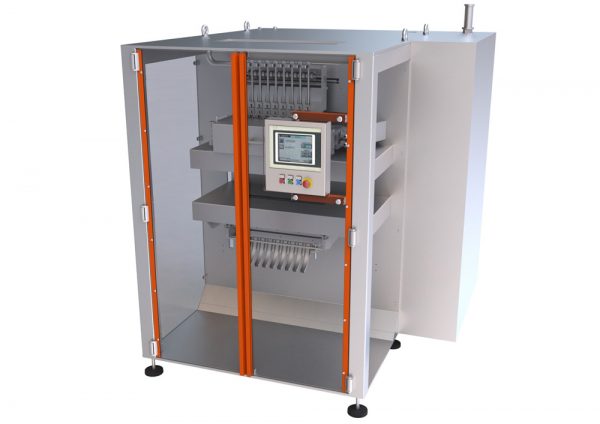
Why choose E&B for stickpack machinery?
E&B takes a consultative approach to packaging machinery selection.
Rather than starting with a particular machine or manufacturer, we consider the product, required dose, packaging material, production output, available space and downstream requirements before helping identify an appropriate solution.
This is particularly important with stickpack machinery, where filling technology, number of lanes, pack dimensions and production speed all need to work together.
E&B’s wider packaging machinery portfolio also means the stickpack process can be considered alongside associated cartoning, case packing and end-of-line requirements.
The result is a solution designed around the application and how the packaging operation needs to work as a whole.
Related packaging solutions
Sachet Machines
Automatic sachet packaging machinery for powders, granules, liquids, pastes and gels, including multi-lane solutions.
Cartoning Machinery
Horizontal and vertical cartoning machinery for counting, collating and loading stickpacks into cartons.
Vertical Cartoners
Vertical cartoning solutions for secondary packaging of individual packs.
Case Packers
Case packing equipment for downstream secondary packaging and palletising.
Frequently asked questions about stickpack machines
What is a stickpack machine?
A stickpack machine forms, fills and seals narrow flexible packs containing controlled quantities of product. Automated machines can produce several stickpacks simultaneously using multiple production lanes.
What products can be packed in stickpacks?
Stickpack machinery can be configured for suitable powders, granules, liquids and gels. The filling system needs to be selected according to the characteristics of the particular product.
What is a multi-lane stickpack machine?
A multi-lane machine forms and fills several stickpacks during the same production cycle, enabling manufacturers to achieve higher production outputs.
What is the difference between a stickpack and a sachet?
A stickpack is typically narrow and elongated, while a sachet is generally wider and flatter. Both provide flexible individual packaging, but the appropriate format depends on the product, dose, consumer use and production requirements.
Are stickpacks only suitable for powders?
No. Although powders are a common application, appropriately configured stickpack machines can also handle granules, liquids and gels.
Can stickpacks be packed automatically into cartons?
Yes. Stickpacks can form part of a wider automated packaging line in which individual packs are counted, collated and loaded into cartons before progressing to case packing and palletising.
How many lanes does a stickpack machine need?
There is no single correct number. The appropriate configuration depends on the required output, pack dimensions, product, dose, filling technology and available production space.
Are stickpacks a sustainable packaging format?
Their narrow dimensions can help reduce the amount of material required for an individual portion in some applications. Overall sustainability also depends on factors such as the packaging material, product protection, recyclability, production efficiency and waste.
Talk to E&B about your stickpack packaging requirements
Whether you are introducing stickpack packaging for the first time, replacing existing equipment or looking to increase production capacity, E&B can help assess the product, filling requirements and appropriate level of automation.