
Accurate Moisture Analysis for Plastics and Polymer Materials
Moisture content can have a significant impact on the processing and performance of plastic materials. Even relatively small amounts of residual moisture can affect production consistency and ultimately the quality of the finished component.
Accurate moisture analysis gives manufacturers, laboratories and research teams greater confidence in the condition of materials before and during processing.
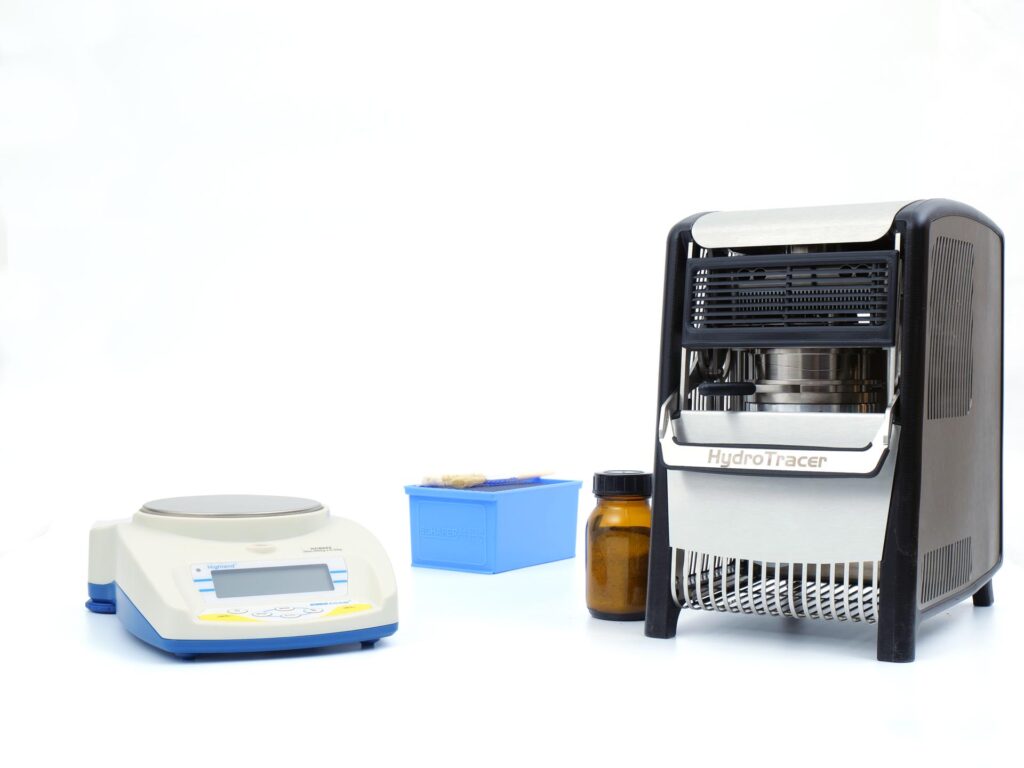
E&B supplies the HYDROTRACER HT3® Moisture Meter for Plastics from Aboni, providing accurate measurement of residual moisture in pellets, powders and finished components. Compact and transportable, the system can be used across different stages of plastics production, from incoming material inspection and drying optimisation through to quality control and product development.
Why is Moisture Analysis Important in Plastics Processing?
Controlling moisture is an important part of plastics processing and quality assurance.
Materials can absorb moisture during storage, transportation and production. Understanding exactly how much water is present allows manufacturers to assess material condition and determine whether drying processes are working effectively.
Moisture analysis can be used to:
Check incoming granulates and raw materials
Monitor and optimise material drying
Measure moisture during production
Check finished components after conditioning
Support laboratory quality control
Support research and product development
Investigate processing or quality issues
Reliable measurement provides useful data at several stages of the production process rather than relying solely on predetermined drying times or material assumptions.
Our Products
Moisture Analysis
Hydrotracer Product
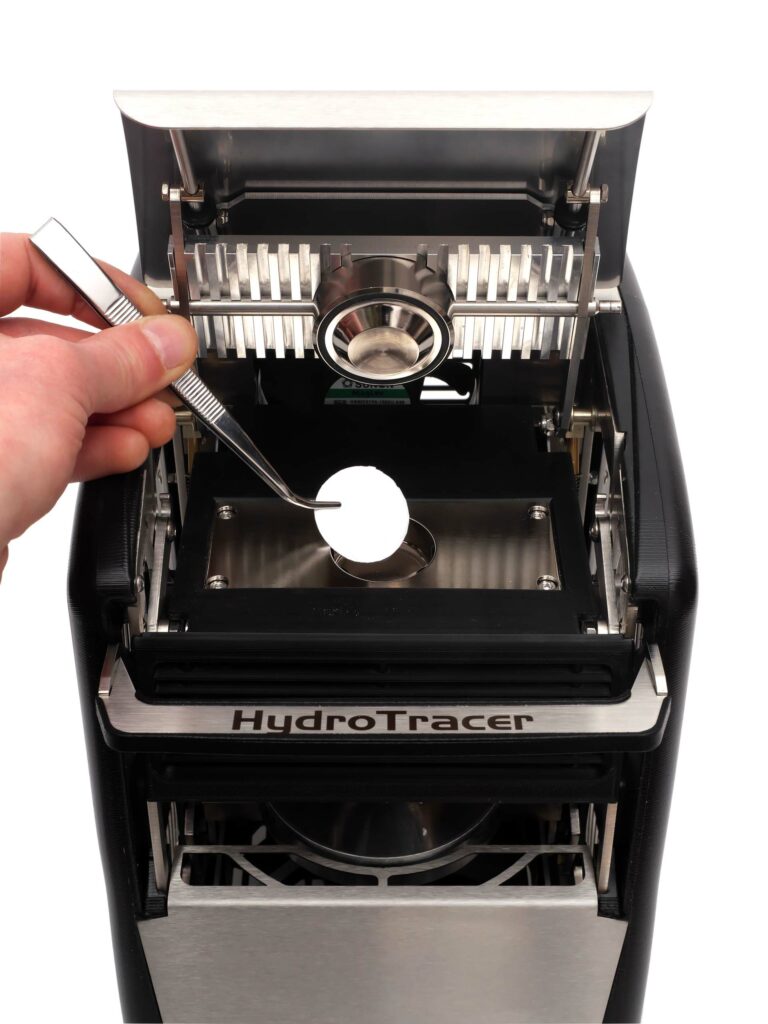
E&B supplies the HYDROTRACER HT3® Moisture Meter for Plastics from Aboni.
The HYDROTRACER HT3® uses a modified calcium hydride method in accordance with DIN EN ISO 15512:2019 for determining the water content of plastics.
Because the principle of operation uses an absolute chemical measurement method, calibration to the individual test material is not required.
The instrument can reliably measure residual moisture within:
- Plastic pellets
- Granulates
- Powders
- Finished components
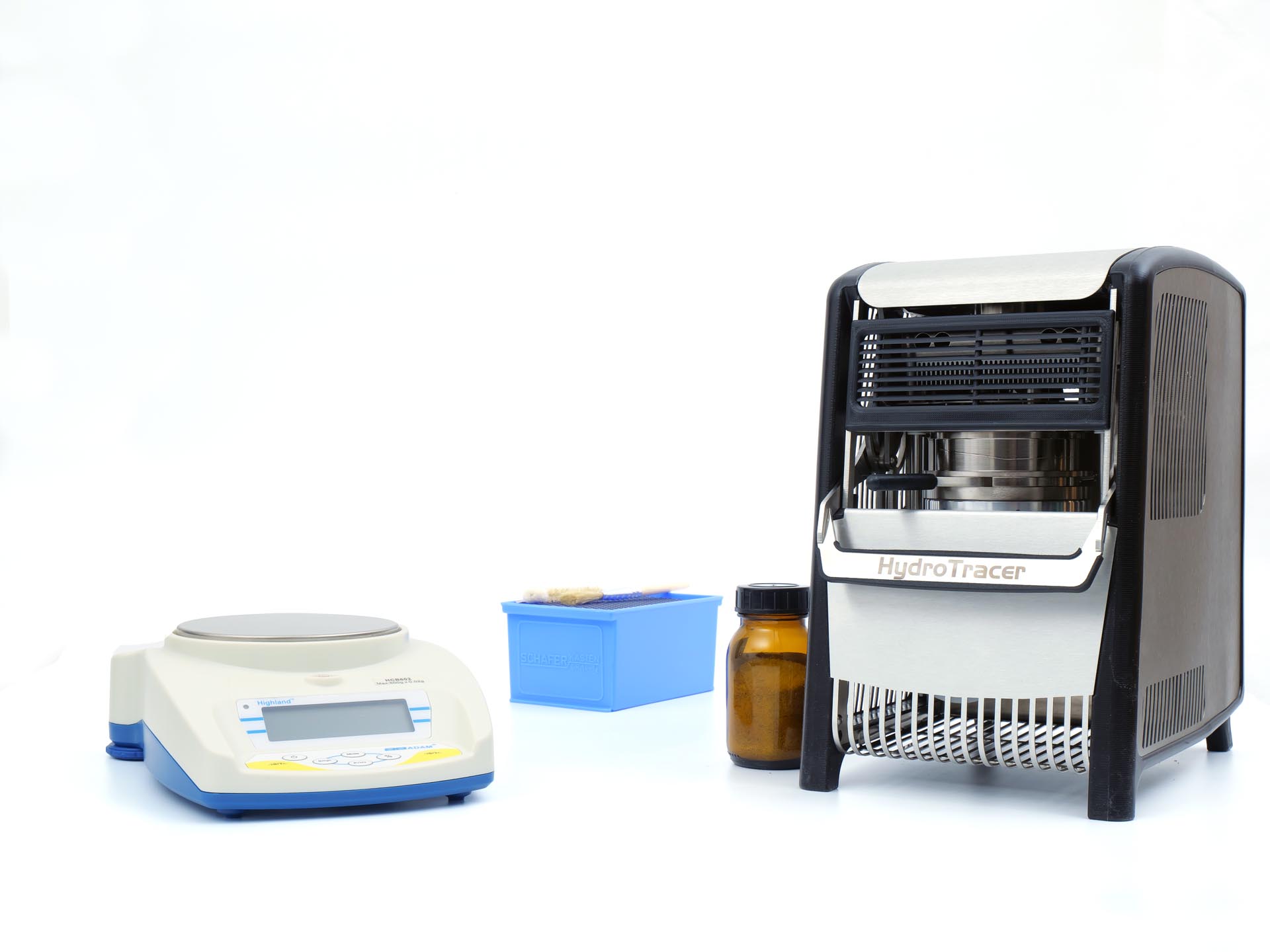
The system connects to a PC via USB, with dedicated software guiding the operator through the measurement process step by step and recording the results within a concise PDF report.
Where Can Moisture Analysis Be Used?
The compact and transportable design of the HYDROTRACER HT3® means moisture testing does not have to be restricted to a dedicated laboratory.
Incoming Material Inspection
Measure the residual moisture content of incoming raw materials and granulates before they enter the production process.
This can help identify unsuitable material before it creates problems further down the line.
Drying Process Optimisation
Check whether granulates and powders have reached the required moisture level following drying.
Accurate measurement can help manufacturers optimise drying processes rather than relying solely on predetermined drying cycles.
In-Process Moisture Testing
Measure the moisture content of granulates during production, providing additional information for process monitoring and troubleshooting.
Finished Component Testing
Analyse finished components after production or conditioning to better understand their residual moisture content.
Research & Development
Use accurate moisture measurements as part of material evaluation, formulation development and wider polymer research programmes.
Quality Control
Introduce repeatable moisture measurement into routine quality assurance procedures to help maintain greater consistency across materials and production processes.
Benefits of Accurate Polymer Moisture Analysis
Improve Process Control
Reliable moisture data gives production teams a clearer understanding of material condition before processing begins.
Optimise Material Drying
Testing materials following drying helps determine whether the required moisture level has actually been achieved and can support more efficient drying processes.
Support Consistent Product Quality
Monitoring moisture as part of routine quality control can help identify variations in materials and processes before they affect finished components.
Support Material Development
For research teams developing new polymers, compounds or more sustainable materials, accurate moisture measurement provides useful data when comparing material behaviour and processing characteristics.
Test Where You Need To
The compact and robust design of the HYDROTRACER HT3® makes it suitable for laboratory measurements as well as testing at different points within the plastics production process.
HYDROTRACER HT3® Technical Capabilities
The HYDROTRACER HT3® provides highly sensitive moisture measurement across a broad range of plastics testing applications.
Key capabilities include:
Measurement according to DIN EN ISO 15512:2019
Resolution down to 1 ppm / 0.0001% H₂O
Measurement range from 0.0001% to 5% H₂O
Sample volumes up to 130 cm³
Measuring temperatures from 50°C to 210°C
Typical measuring times of approximately 10 to 45 minutes depending on material
Results displayed in %, ppm or mg
USB connection and PC-based software
Automated PDF reporting
Who Uses Plastics Moisture Analysis Equipment?
Moisture analysis has applications anywhere accurate control of polymer materials is important.
Plastics Manufacturers
Monitor raw materials, drying performance and production processes as part of day-to-day manufacturing.
Polymer & Compound Manufacturers
Measure residual moisture when developing, producing and assessing polymer compounds and formulations.
Injection Moulding & Extrusion
Check materials before processing and investigate moisture-related variations within production.
Universities & Research Laboratories
Support polymer research, material development and experimental processing programmes.
Quality Control Laboratories
Introduce accurate and repeatable moisture measurement into routine testing and material verification.
Choosing the Right Moisture Analysis Equipment
The right moisture analysis method depends on the materials being tested, the required measurement range, where testing will take place and how the results will be used.
Important considerations include:
- Material type
- Expected moisture content
- Required measurement accuracy
- Sample size
- Testing temperature
- Laboratory or production use
- Reporting requirements
- Frequency of testing
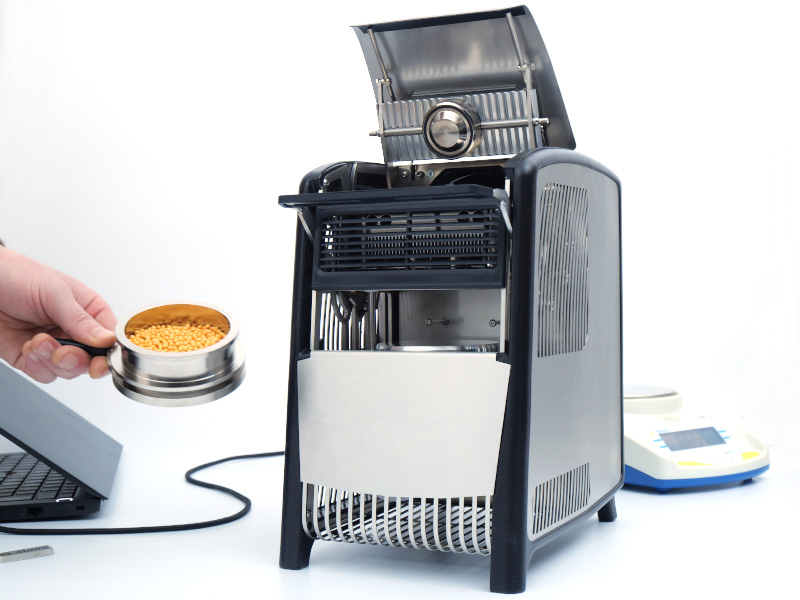
E&B can help assess your application and determine whether the HYDROTRACER HT3® is the appropriate solution for your testing requirements.
Why Choose E&B?
Selecting polymer testing equipment requires an understanding of both the instrument and the application in which it will be used.
E&B works with specialist polymer testing manufacturers including Aboni to provide equipment for research, development, production and quality control.
From initial discussions around your testing requirements through to equipment selection and ongoing support, our team can help you identify a moisture analysis solution that fits your materials, processes and testing objectives.
Frequently asked questions
Why is moisture analysis important for plastics?
Residual moisture can affect the processing and quality of plastic materials. Measuring moisture helps manufacturers assess raw materials, optimise drying and introduce greater control into production and quality assurance.
What materials can the HYDROTRACER HT3® test?
The HYDROTRACER HT3® can measure residual moisture in plastic pellets, granulates, powders and finished components.
How does the HYDROTRACER HT3® measure moisture?
The instrument uses a modified calcium hydride method in accordance with DIN EN ISO 15512:2019. It is an absolute chemical measurement method, meaning calibration to the individual test material is not required.
Can moisture analysis be carried out during production?
Yes. The HYDROTRACER HT3® is compact and transportable and can be used to analyse granulates at different points within the production process as well as within a laboratory environment.
Can moisture testing help optimise material drying?
Yes. Measuring materials after drying provides evidence of their actual residual moisture content, helping manufacturers assess and optimise their drying processes.
How do I choose the right moisture analysis equipment?
This depends on the materials being tested, expected moisture levels, sample size, required accuracy and where the equipment will be used. E&B can discuss your requirements and advise on the most appropriate testing solution.
Speak to E&B About Moisture Analysis
If you’re looking to improve moisture measurement within plastics production, quality control or polymer research, E&B can help.
Our experienced team can discuss your materials and testing requirements and help you determine whether the HYDROTRACER HT3® is the right moisture analysis solution for your application.