
Coding & Marking
Industrial Inkjet Printers & Coding Systems
Industrial inkjet printers allow manufacturers to print essential information directly onto products, packaging and other materials as part of their production process.
From batch numbers, expiry dates and barcodes to variable data, logos and full-colour graphics, modern inkjet printing technology provides a flexible way to apply accurate, repeatable information without relying on traditional printing plates.
E&B supplies industrial inkjet printing and coding solutions for manufacturers looking to improve production efficiency, automate product identification or introduce more sophisticated printing capabilities into existing packaging lines.
Working with specialist technology partners, we help manufacturers assess the most appropriate printing technology based on the substrate, print requirements, production speed and wider manufacturing process.
Whether the requirement is straightforward date coding or high-resolution colour printing, our approach starts with understanding what needs to be printed, where it needs to appear and how the system must operate within the production environment.
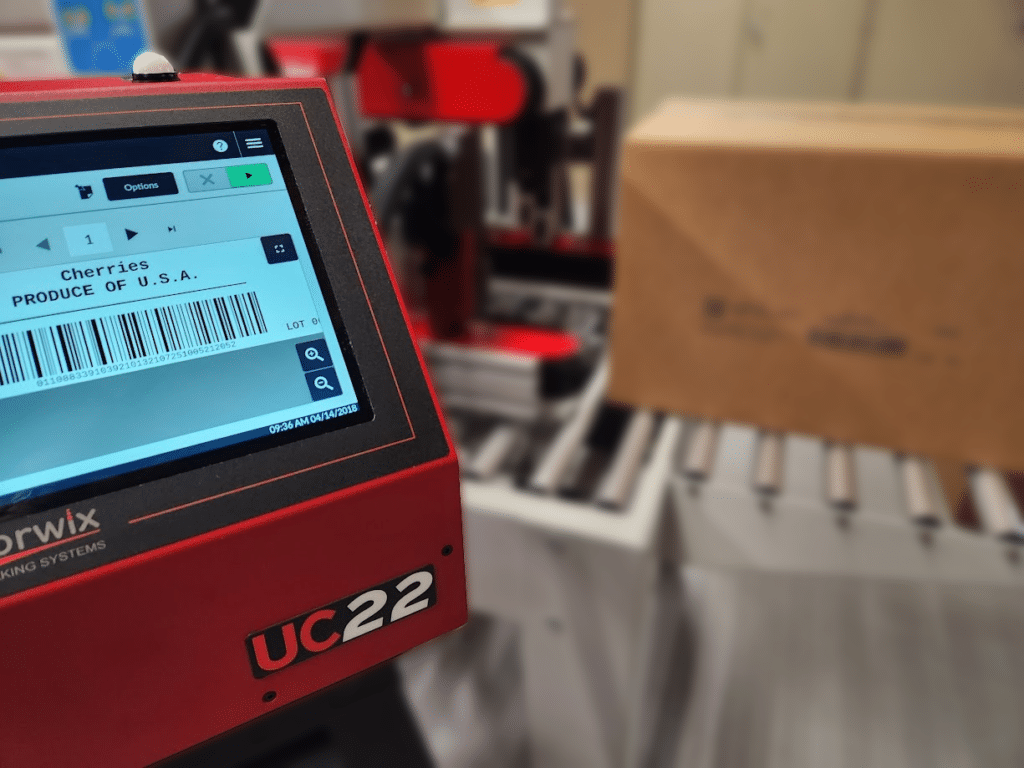
What Is an Industrial Inkjet Printer?
An industrial inkjet printer is a non-contact printing system used to apply text, codes, graphics or other information to products and packaging.
Instead of using a physical printing plate, the printer deposits ink onto the required surface according to a digitally controlled print pattern.
This makes inkjet technology particularly useful where printed information changes frequently, such as batch numbers, production dates, product identifiers and personalised content.
Depending on the equipment, industrial inkjet printers can be used for:
The correct printer depends on the material, print size, required resolution, ink compatibility and production conditions.
Industrial Inkjet Printing Technologies
Different inkjet technologies are suited to different applications. Understanding the differences is an important part of selecting the right system.
Thermal Inkjet Printers (TIJ)
Thermal inkjet printers use replaceable ink cartridges containing integrated printheads.
They are widely used in packaging environments because they can produce clean, high-resolution printing with relatively straightforward operation and maintenance.
TIJ systems are commonly used for:
- Date and batch coding
- Variable data printing
- Barcode printing
- Packaging identification
- High-resolution graphics
The FC108 uses HP Thermal Inkjet 4.0 technology.
Continuous Inkjet Printers (CIJ)
Continuous inkjet printers generate a continuous stream of ink droplets and are often used for high-speed coding on products and packaging.
They are commonly found in food, beverage and other fast-moving production environments.
High-Resolution Inkjet Printing
High-resolution inkjet systems are used where print clarity is important.
This can include detailed graphics, small text, barcodes and other information that must remain readable.
Resolution requirements should always be considered alongside print size, viewing distance and substrate.
Full-Colour Industrial Inkjet Printing
Some modern industrial inkjet systems can print full-colour graphics as well as variable information.
This allows manufacturers to apply branding, product images, promotional content and production data in a single printing process.
E&B’s FC108 solution is an example of this technology.
It is designed for applications where colour printing and variable data need to be produced together within a production environment.
Industrial Inkjet Printing in Action
What Can Industrial Inkjet Printers Print?
Batch Codes and Date Coding
Batch numbers, production dates, expiry dates and other traceability information can be printed directly onto packaging.
Barcodes and QR Codes
Many industrial inkjet printers can produce machine-readable codes, including barcodes and QR codes.
Print quality and code size must be suitable for the scanning equipment being used.
Variable Data
Variable data printing allows information to change between products without stopping production.
This can include serial numbers, product identifiers and personalised content.
Graphics, Logos and Colour Images
Higher-resolution systems can print logos, graphics and full-colour images onto suitable materials.
Text and Product Information
Ingredients, instructions, handling information and other product details can also be printed where the printer and ink are suitable for the material.
Inkjet Printing for Packaging Machinery
Industrial inkjet printers are often integrated into packaging machinery so that printing takes place during the packaging process.
This can remove the need for separate labelling or manual coding stages.
Printing can be integrated with equipment such as:
Where printing must align with a specific area of the pack, the printer, sensors and line control need to be configured accordingly.
E&B can advise on how inkjet printing can be incorporated into existing or new packaging machinery.
Industrial Inkjet Printing Solutions
E&B works to provide specialist industrial inkjet printing technology.
develops digital printing solutions for applications including coding, marking, variable data and industrial production printing.
Its technology includes wide-format thermal inkjet systems designed to support high-resolution printing and integration with suitable production equipment.
FC108 Wide Format TIJ 4.0 Colour Printer
It is designed for manufacturers requiring high-resolution CMYK printing alongside variable information such as barcodes, batch codes, dates and product identifiers.
Key capabilities include:
HP Thermal Inkjet 4.0 technology
CMYK full-colour printing
Native 1200 dpi resolution
Maximum print height of 108 mm per printhead
Wider print configurations available
Variable data and barcode printing
Integration with production and packaging lines
The FC108 is particularly relevant where manufacturers need to combine detailed colour graphics and variable data within an automated printing process.
Our products
Our Industrial Inkjet Printer Range
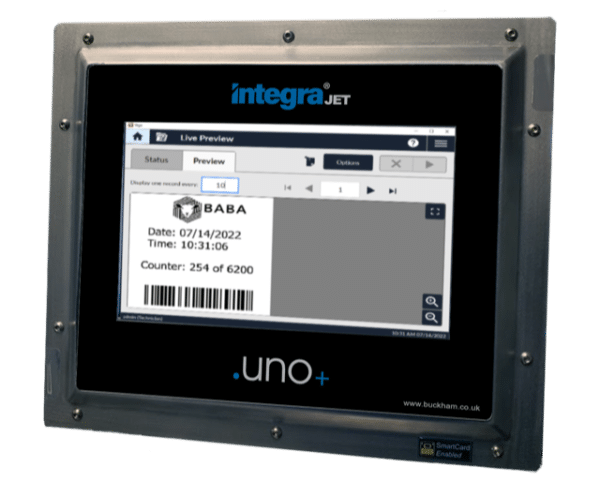
.UNO & .UNOplus TIJ Coding
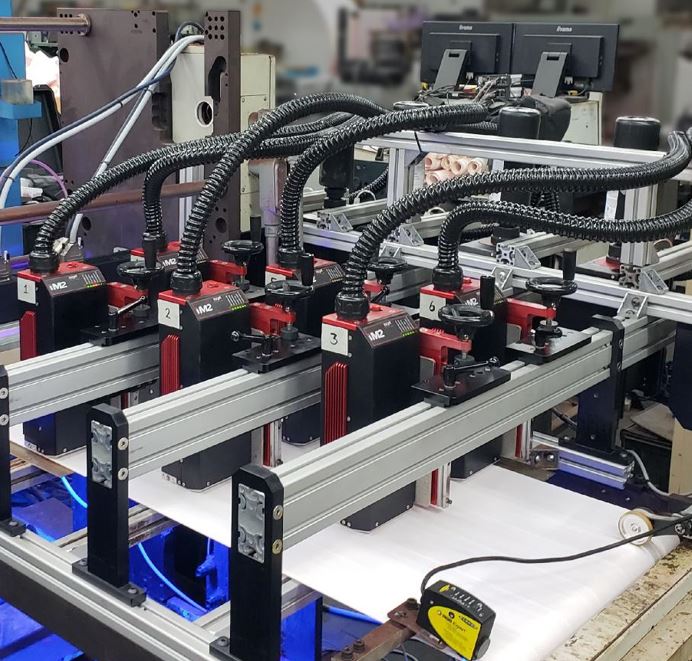
IM2 – UV Curable Coding
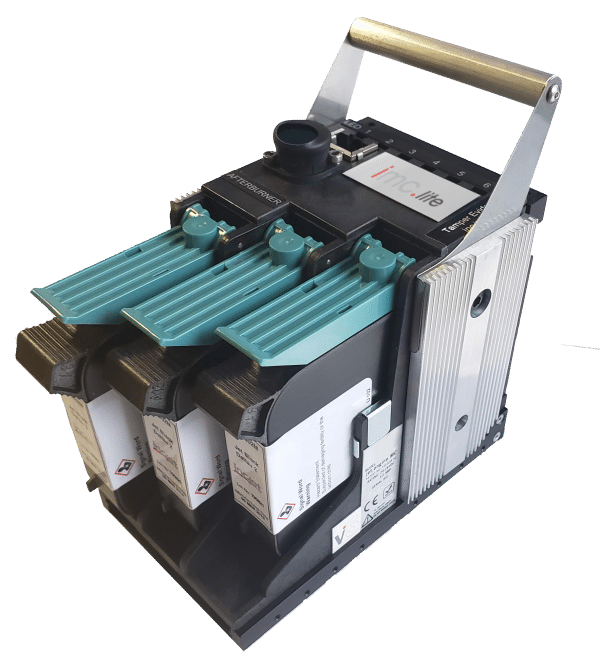
imc.lite Entry Level Ink Jet System
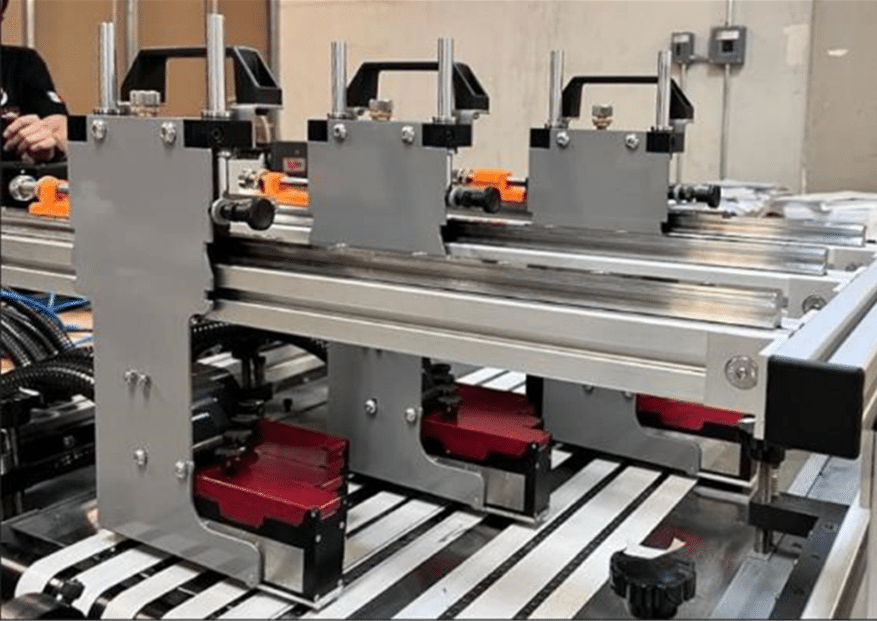
PC22 – Ink Jet Printer
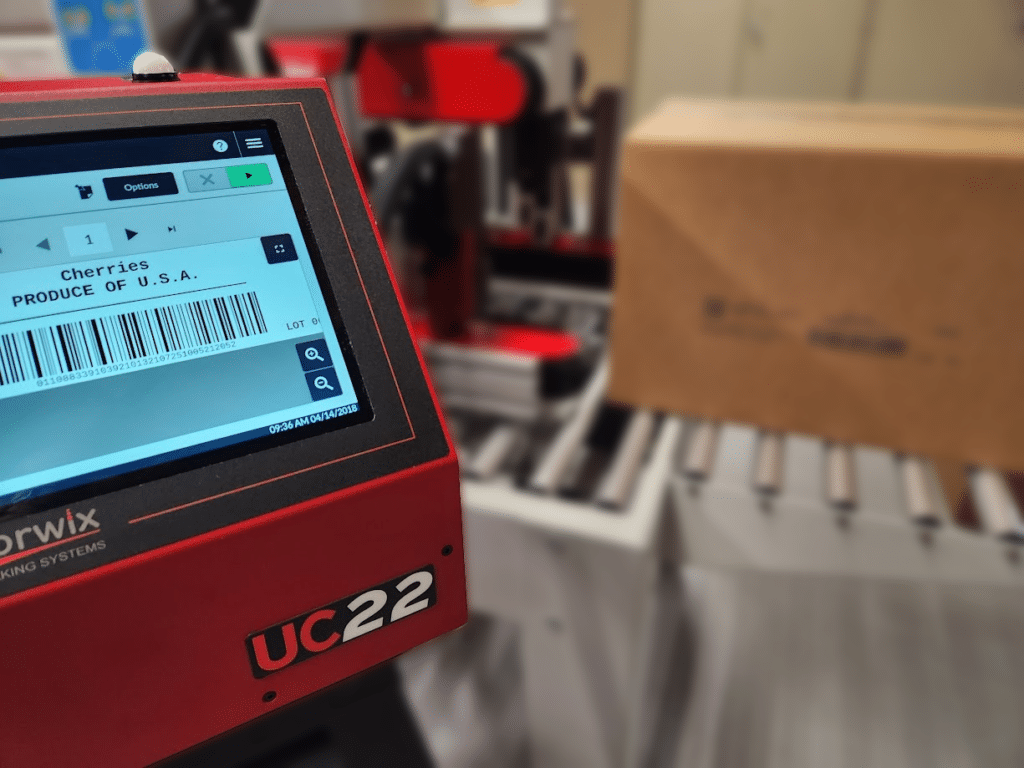
UC22 Case Coder
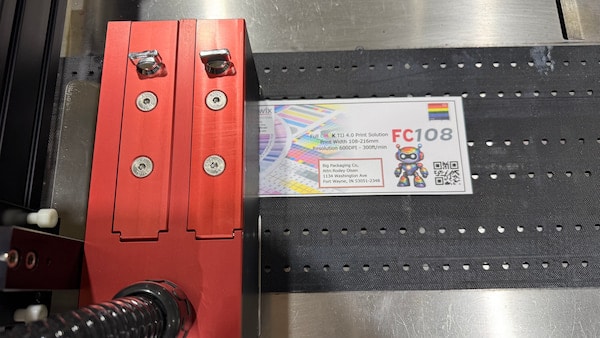
FC108 Colour Inkjet Printer
Choosing the Right Inkjet Printer for Your Material
The material being printed is one of the most important considerations when selecting industrial inkjet equipment.
Cardboard and Corrugated Packaging
Cardboard and corrugated materials are commonly used for case coding, product identification and logistics information.
Ink selection should take account of absorbency and the required print durability.
Paper and Mailing Materials
Paper-based materials are widely used for direct mail, addressing and variable data printing.
These applications often require reliable, high-resolution printing at production speeds.
Flexible Packaging Films
Flexible films can present additional challenges because of surface characteristics and ink adhesion requirements.
The printer, ink and production conditions should be assessed together.
Plastic Bottles and Containers
Printing onto plastics depends on the polymer, surface energy and ink formulation.
Testing is normally recommended before finalising a solution.
Other Industrial Materials
Industrial inkjet printing may also be considered for labels, coated materials and other substrates.
Material samples should be tested where suitability is uncertain.
Integrating Inkjet Printers into Automated Production Lines
An industrial inkjet printer needs to work reliably with the production equipment around it.
Depending on the application, the printing process may involve:
Step 01
Product Feeding
Step 02
Product Detection
Step 03
Inkjet Printing
Step 04
Print Inspection
Step 05
Downstream Packaging
Integration requirements can include:
For manufacturers upgrading an existing line, it is important to understand how the printer will interact with current machinery.
E&B can help assess these requirements as part of the wider production and packaging process.
Benefits of Industrial Inkjet Printing
Flexible Printing Without Plates
Digital inkjet printing allows print content to be changed without manufacturing new physical printing plates.
This can be particularly useful where production involves multiple products, batches or frequent changes to printed information.
Variable Data Capability
Batch codes, dates, serial numbers and other information can be managed digitally and printed as required.
Production-Line Automation
Suitable industrial inkjet printers can be integrated into automated manufacturing and packaging systems.
High-Resolution Printing
Modern inkjet technology can reproduce detailed text, barcodes and graphics where the application requires them.
Reduced Manual Coding Processes
Automated printing can reduce the need for separate manual labelling or marking operations in suitable applications.
Adaptability Across Applications
Different printer technologies, inks and configurations allow industrial inkjet printing to be considered for a wide variety of manufacturing requirements.
Inkjet Technology in Practice: GB Mail
GB Mail invested in UC22 and MPP4 systems for existing paper wrapping lines, improving efficiency and reducing ink costs.
How to Choose an Industrial Inkjet Printer
Selecting the right printer starts with understanding the application rather than comparing specifications in isolation.
Key questions include:
Answering these questions helps narrow the choice to the most appropriate technology and configuration.
Why Choose E&B for Industrial Inkjet Printing?
E&B supplies packaging machinery and production-line technology to manufacturers across a range of industries.
Our role is to help businesses identify practical, reliable solutions that fit their production requirements.
For industrial inkjet printing, this means considering the printer, ink, substrate, line speed, integration requirements and long-term operating costs together.
We can support manufacturers from initial assessment through equipment selection, installation planning and ongoing technical support.
Frequently asked questions
What is an industrial inkjet printer?
An industrial inkjet printer is a production-line printing system used to apply text, codes, graphics or other information directly onto products or packaging.
What is the difference between TIJ and CIJ printers?
TIJ printers use cartridge-based thermal inkjet technology, while CIJ printers use a continuous stream of ink droplets. The best option depends on the application, print requirements and production environment.
Can industrial inkjet printers print barcodes and QR codes?
Yes, many industrial inkjet printers can print barcodes and QR codes, provided the resolution, print size and ink are suitable for the application.
Can inkjet printers print in colour?
Yes. Some industrial inkjet systems, such as the FC108, can print full-colour graphics, logos and images alongside variable production information.
Can inkjet printers print on plastic packaging?
Yes, certain industrial inkjet printers can print on plastic packaging. However, suitability depends on the type of plastic, surface characteristics and ink formulation. Testing is recommended to ensure proper ink adhesion and print durability.
Can inkjet printers be integrated into packaging lines?
Yes. Industrial inkjet printers can be integrated into existing or new packaging lines, including conveyors, cartoning machines, flow wrappers and other automated production equipment. Integration requirements depend on the printer, production speed and control systems.
What information can be printed using inkjet technology?
Depending on the printer, this can include dates, batch codes, barcodes, QR codes, serial numbers, text, logos, graphics and variable data.
How do I choose the right industrial inkjet printer?
The choice should be based on the material, print content, resolution, colour requirements, production speed, integration needs and operating environment.
Speak to E&B about your laboratory processing requirements
If you’re looking to invest in laboratory mixing and extrusion equipment or expand your polymer research capabilities, we’d be pleased to discuss your requirements.
Our experienced team can help you identify the most appropriate Permtech solution for your application, supporting research, innovation and product development now and into the future.