
Mailing & Inserting Machines
Mailing and inserting machines help print and mailing businesses automate the preparation, assembly and handling of printed materials for distribution.
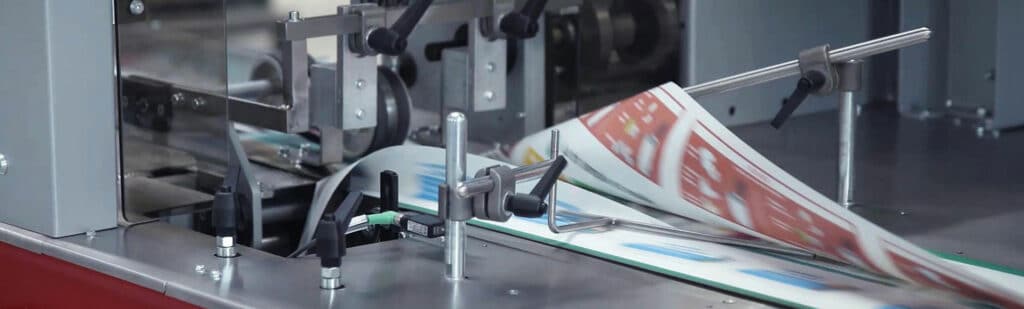
From personalised letters and promotional inserts to magazines, catalogues and other direct mail products, automated inserting equipment can reduce manual handling, improve production consistency and support higher mailing volumes.
E&B supplies specialist direct mail and post-press machinery for businesses looking to increase capacity, improve existing production processes or develop more integrated mailing operations.
Working with established manufacturers including Sitma, we help customers identify suitable machinery for their mailing formats, production volumes and operational requirements.
Whether you are moving away from manual inserting or upgrading an established high-volume mailing line, our approach starts with understanding the materials you handle and how they need to be assembled, addressed and prepared for dispatch.
What Is a Mailing and Inserting Machine?
A mailing and inserting machine automates one or more stages involved in assembling printed materials into a finished mailing product.
Depending on the application, this may involve feeding printed sheets, gathering multiple inserts, placing documents into envelopes, adding promotional materials to publications or transferring completed mailpieces to downstream equipment.
Some systems operate as standalone machines, while others form part of an integrated production line incorporating printing, folding, wrapping, addressing and sorting.
- Direct mail campaigns
- Letters and statements
- Promotional flyers
- Newspaper and publication inserts
- Personalised mailings
- Transactional mail
- Marketing leaflets
- Magazines and catalogues
- Subscription fulfilment
- Print finishing and distribution
The appropriate equipment depends on the format, dimensions and physical characteristics of the material, as well as the required production output.
Types of Mailing and Inserting Machinery
Automatic Document Inserting Machines
Document inserting machines feed and assemble sheets or other suitable materials into a defined sequence.
They can be used where several documents need to be combined before entering an envelope or another mailing format.
The machine configuration must accommodate the number of inserts, their dimensions, paper characteristics and the required production speed.
Envelope Inserting and Enclosing Machines
Envelope enclosing machines automatically insert letters, documents or promotional materials into envelopes.
Depending on the system, additional functions may include folding, gathering, envelope feeding and sealing.
These machines are particularly relevant for businesses producing high volumes of letters, statements and direct mail.
Magazine and Publication Inserting Systems
Publication inserting systems can introduce promotional leaflets, flyers or other materials into magazines, newspapers and similar printed products.
The process may be integrated with existing binding, stitching or finishing equipment.
Accurate feeding and positioning are important to maintain consistent production and reduce handling errors.
Collating and Gathering Equipment
Collating systems bring together multiple printed components in a predetermined sequence.
This can be useful where a mailing contains several documents or where promotional materials need to be assembled before wrapping or enclosing.
Mailing Line Feeders
Automatic feeders supply individual sheets, documents or other suitable printed products to downstream machinery.
Reliable feeding is essential for maintaining line speed and reducing interruptions caused by double-feeds, misfeeds or material handling problems.
Integrated Mailing and Wrapping Lines
Some mailing operations require more than inserting.
Integrated lines can combine suitable feeding, gathering, wrapping, addressing and discharge equipment to create a more automated production process.
E&B can help assess these requirements alongside its wider direct mail and post-press machinery portfolio.
How Does an Automated Mailing and Inserting Line Work?
The exact process depends on the mailing format and equipment configuration.
A typical operation may involve:
Document or product feeding: Printed materials are introduced into the production line.
Collation and gathering: Individual items are assembled into the required order.
Inserting: Documents or promotional materials are inserted into the appropriate mailing format. .
Enclosing or wrapping: The assembled mailing is placed into an envelope or suitable wrapping material.
Addressing and coding: Recipient details, barcodes or other variable information are applied where required.
Verification: Suitable systems can check information or confirm that the correct components have been assembled.
Stacking and dispatch preparation: Completed mailpieces are organised for subsequent sorting, handling or distribution.
Not every mailing line requires all these stages. The most appropriate arrangement depends on the finished mailpiece and the level of automation required.
Mailing Machines for Different Applications
Direct Marketing Campaigns
Direct mail campaigns may involve letters, brochures, flyers, promotional inserts or personalised marketing materials.
Automated mailing machinery helps businesses assemble these components consistently while managing production volumes.
Transactional Mail
Transactional mailing includes documents such as statements, invoices and customer correspondence.
These applications can require particularly careful handling of variable information, document sequencing and recipient matching.
Magazine and Catalogue Distribution
Publishers and fulfilment businesses often need to prepare publications for mailing, sometimes incorporating promotional inserts or supplementary materials.
Automated feeding, inserting and wrapping equipment can help reduce manual handling.
Print and Mailing Fulfilment
Commercial print and mailing businesses may process several different customer jobs each day.
Machinery flexibility, changeover requirements and the ability to accommodate different materials are therefore important considerations.
Personalised Mailing
Where mailpieces contain recipient-specific information, the production system may need to coordinate document handling with digital printing, addressing and verification.
The appropriate level of control depends on the sensitivity and complexity of the mailing.
Benefits of Automated Mailing and Inserting Machinery
Reduced Manual Handling
Automated equipment can reduce the repetitive work involved in feeding, gathering and inserting printed materials.
This allows operators to concentrate on production supervision, quality control and other tasks.
Higher Production Capacity
A correctly specified mailing system can process greater volumes than a predominantly manual operation.
Actual output depends on the mailing format, number of components and machine configuration.
More Consistent Mailpiece Assembly
Automated feeding and inserting help maintain a repeatable production sequence.
Where additional verification is required, suitable inspection and control systems can be incorporated.
Better Production Planning
Reliable equipment and appropriate changeover arrangements can help mailing businesses plan jobs and manage production schedules.
Reduced Handling Errors
Automating individual processes can reduce some of the errors associated with manual collation and insertion.
However, the required quality-control and verification systems must still be specified for the application.
Integration with Existing Equipment
Mailing and inserting machinery can be combined with suitable print finishing, wrapping, addressing and downstream handling systems.
Sitma Direct Mail and Post-Press Machinery
E&B works with Sitma, a specialist manufacturer of direct mail, post-press and packaging automation equipment.
Sitma’s technology is used in applications involving newspapers, magazines, books, direct mail and e-commerce packaging.
For mailing businesses, the wider Sitma portfolio provides opportunities to consider inserting, product handling and wrapping as part of an integrated production process.
This can be particularly valuable where the requirement extends beyond a single machine.
For example, a business preparing magazines for distribution may need to combine product feeding, promotional inserts, wrapping, addressing and stacking.
The correct arrangement depends on the product and production requirements.
E&B can help customers evaluate appropriate Sitma machinery and how it could be integrated with existing equipment.
Integrating Mailing Machinery with Inkjet Addressing
Addressing and variable data printing are important parts of many direct mail operations.
Industrial inkjet systems can be used to apply suitable recipient information, barcodes and other data to mailpieces or wrapping materials.
Depending on the production process, printing may take place before, during or after the inserting and enclosing operation.
E&B supplies industrial inkjet printing technology alongside its mailing machinery portfolio, allowing both processes to be considered together.
Norwix Inkjet Technology in a UK Mailing Operation
GB Mail, a UK high-volume print and mailing business, upgraded its paper wrapping lines with Norwix inkjet systems supplied by E&B.
The installation involved Norwix UC22 and MPP4 technology and demonstrated improvements in production efficiency and changeover performance.
GB Mail reported a 20% increase in production speed following the investment.
The project provides a useful example of how upgrading one part of a mailing line can improve the performance of the wider operation.
Mailing, Inserting, Envelope Enclosing and Wrapping – What's the Difference?
These terms describe related but distinct processes.
| Process | Main function |
|---|---|
| Mailing machinery | Broad equipment category for preparing mailpieces for distribution |
| Inserting machinery | Places documents or promotional materials into another item or mailing format |
| Envelope enclosing | Inserts contents into envelopes and may include sealing |
| Paper wrapping | Encloses suitable printed products within a paper-based wrapper |
| Poly wrapping | Encloses suitable printed products in a film wrapper |
| Inkjet addressing | Applies addresses, barcodes and variable printed information |
A mailing operation may use several of these technologies together.
For example, a magazine mailing line could feed a publication, add an insert, wrap the assembled product, print the recipient address and transfer the completed item to a stacking system.
The correct solution depends on the finished mailing format.
Sustainable Mailing and Packaging Options
Many mailing businesses are reviewing the materials they use to prepare printed products for distribution.
In particular, the choice between paper wrapping, film wrapping and envelope enclosing can affect material use, production costs, mailpiece presentation and the options available for recycling.
Paper-based wrapping may be appropriate for some publication and direct mail applications, while envelopes or other formats may be more suitable for different products.
The most appropriate choice depends on the dimensions and weight of the contents, the required protection, postal requirements and the available machinery.
E&B can help businesses evaluate these options alongside the production equipment required to process them.
The environmental performance of a mailing format should be assessed using the actual materials and distribution conditions rather than assuming one format is always preferable.
Upgrading Existing Mailing and Inserting Equipment
Not every production improvement requires a completely new mailing line.
For some businesses, an upgrade to feeding, addressing, conveying or another individual process may provide a worthwhile improvement.
E&B also has experience in machinery refurbishment and bespoke equipment, including work for mailing and printing businesses.
Where appropriate, we can help assess whether existing equipment can be adapted, refurbished or integrated with newer technology.
This can be particularly useful where a business has a reliable core machine but needs to improve one part of the production process.
How to Choose the Right Mailing and Inserting Machine
Before specifying equipment, it is important to understand the complete mailing requirement.
Questions to consider include:
- What products or documents need to be handled?
- How many items must be inserted into each mailing?
- Are documents folded before inserting?
- What production output is required?
- Is personalised addressing required?
- What existing equipment must be retained?
- What downstream stacking or sorting is required?
- What are their dimensions and paper characteristics?
- Will the contents vary between recipients?
- Will the finished product be enclosed in an envelope or wrapper?
- How frequently will jobs and formats change?
- Are barcode reading or document verification needed?
- What floor space is available?
- Are there plans to increase production capacity?
These factors help establish the appropriate machinery configuration and whether a standalone machine or integrated line is required.
How to Choose the Right Mailing and Inserting Machine
Before specifying equipment, it is important to understand the complete mailing requirement.
Questions to consider include:
• What products or documents need to be handled?
• How many items must be inserted into each mailing?
• Are documents folded before inserting?
• What production output is required?
• Is personalised addressing required?
• What existing equipment must be retained?
• What downstream stacking or sorting is required?
• What are their dimensions and paper characteristics?
• Will the contents vary between recipients?
• Will the finished product be enclosed in an envelope or wrapper?
• How frequently will jobs and formats change?
• Are barcode reading or document verification needed?
• What floor space is available?
• Are there plans to increase production capacity?
These factors help establish the appropriate machinery configuration and whether a standalone machine or integrated line is required.
Why Choose E&B for Mailing and Inserting Machinery?
E&B has extensive experience supplying machinery to the printing, direct mail and post-press industries.
We work with businesses ranging from smaller mailing operations introducing automation to established high-volume mail producers looking to improve existing lines.
Through specialist manufacturing partners including Sitma, and our wider capabilities in inkjet printing, wrapping, refurbishment and bespoke equipment, we can help customers consider the complete mailing process.
Our approach focuses on understanding the application, identifying the appropriate machinery and ensuring that the proposed solution supports the wider production operation.
Frequently Asked Questions About Mailing and Inserting Machines
What is a mailing and inserting machine?
What is the difference between an inserting machine and an envelope enclosing machine?
Can mailing machines handle different document sizes?
Can several inserts be included in one mailing?
Can mailing machines be integrated with inkjet addressing?
Are automated mailing systems suitable for personalised direct mail?
Can existing mailing machinery be upgraded?
What is the difference between paper wrapping and envelope enclosing?
Talk to E&B About Mailing and Inserting Machinery
Whether you are automating manual inserting, increasing direct mail production capacity or upgrading an existing mailing line, E&B can help assess the appropriate machinery.
Contact our team to discuss your mailing formats, production volumes and existing equipment.