
Automatic Envelope Enclosing Machines & High-Speed Envelope Inserters
Automatic Envelope Enclosing Machines & High-Speed Envelope Inserters
Automatic envelope enclosing machines help mailing and print businesses prepare high volumes of letters, documents and promotional materials for distribution.
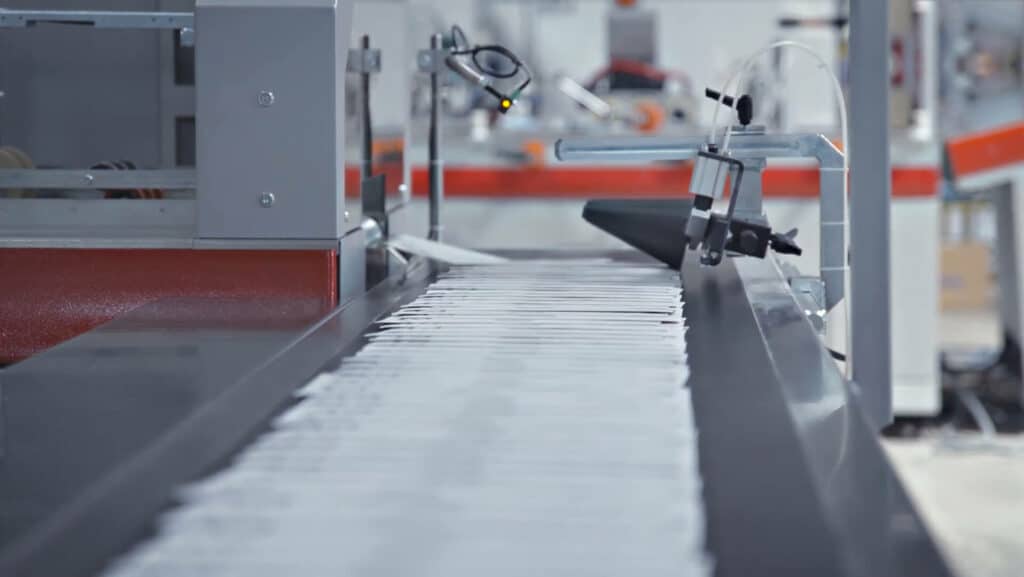
By automating the feeding, gathering, inserting and, where required, sealing of envelopes, these systems can reduce manual handling, improve consistency and support demanding production schedules.
E&B supplies specialist envelope enclosing and direct mail machinery for businesses looking to increase throughput, improve production efficiency or replace ageing equipment.
Working with established machinery manufacturers including Sitma, we help customers assess the appropriate solution for their envelope formats, inserts, production volumes and wider mailing requirements.
Whether you are handling transactional correspondence, personalised direct mail or multi-component promotional mailings, the correct enclosing system should be selected around the complete production process.
What Is an Envelope Enclosing Machine?
An envelope enclosing machine automatically places letters, documents or other suitable printed materials into envelopes.
Depending on the equipment, the process can incorporate document feeding, folding, collation, insertion, envelope handling and sealing.
These machines are used by businesses that need to produce large quantities of finished mailpieces consistently.
Common applications include:
- Direct marketing letters
- Invoices and customer correspondence
- Multi-page document packs
- Membership communications
- Financial and insurance correspondence
- Transactional statements
- Promotional mailings
- Personalised letters
- Charity and fundraising mailings
- Print and mailing fulfilment
The required machine configuration depends on the envelope size, document format, number of inserts and production output.
How Does an Automatic Envelope Enclosing Machine Work?
Although individual systems differ, the enclosing process generally follows a sequence of automated operations.
Document Feeding
Printed sheets or pre-prepared documents are fed into the machine. Depending on the application, multiple feeding stations may be required for different documents or inserts.
Folding and Collation
Where necessary, documents are folded to fit the required envelope format. Additional components may be gathered into the correct sequence before insertion.
Envelope Feeding
Empty envelopes are supplied to the enclosing section. The machine must handle the specified envelope dimensions, flap design and material characteristics.
Envelope Opening and Insertion
The envelope is presented for insertion, and the prepared documents are transferred into it. Correct alignment and controlled handling are important to reduce jams and damaged mailpieces.
Sealing
Where required, the filled envelope is sealed using a suitable closure process. The precise method depends on the envelope design and machinery
Discharge and Downstream Handling
Completed envelopes are transferred to a discharge, stacking or other downstream handling system. Additional inspection, sorting or production tracking may be incorporated where required.
High-Speed Envelope Enclosing for Direct Mail Production
High-volume mailing businesses often operate to demanding production schedules.
The ability to maintain consistent throughput is therefore an important consideration when selecting an envelope enclosing machine.
However, the maximum published machine speed is only one part of the assessment.
Actual production output can be influenced by:
• Envelope dimensions
• Paper weight and finish
• Insert thickness
• Changeover frequency
• Inspection and verification requirements
• Number of inserted documents
• Document folding requirements
• Envelope quality
• Feeding reliability
• Operator access and maintenance
A machine capable of a high theoretical output may not deliver that rate consistently across every mailing format.
For this reason, E&B helps customers assess the complete application, including realistic production requirements and the range of jobs the equipment will need to handle.
High-Speed Envelope Enclosing for Direct Mail Production
High-volume mailing businesses often operate to demanding production schedules.
The ability to maintain consistent throughput is therefore an important consideration when selecting an envelope enclosing machine.
However, the maximum published machine speed is only one part of the assessment.
Actual production output can be influenced by:
- Envelope dimensions
- Paper weight and finish
- Insert thickness
- Changeover frequency
- Inspection and verification requirements
- Number of inserted documents
- Document folding requirements
- Envelope quality
- Feeding reliability
- Operator access and maintenance
A machine capable of a high theoretical output may not deliver that rate consistently across every mailing format.
For this reason, E&B helps customers assess the complete application, including realistic production requirements and the range of jobs the equipment will need to handle.
Envelope Enclosing for Transactional Mail
Transactional mail includes documents such as invoices, statements, financial correspondence and other customer communications.
These applications can require particularly careful control of the relationship between the document and its intended recipient.
Where confidential or personalised information is involved, the enclosing process may need to incorporate additional data reading and verification.
Depending on the equipment and workflow, these controls can help confirm that the appropriate documents are assembled before insertion.
The precise requirements depend on the mailing application, document production system and relevant operational procedures.
For businesses processing sensitive correspondence, E&B can help assess the machinery and integration requirements involved.
Envelope Enclosing for Direct Marketing Campaigns
Direct marketing campaigns often involve more than a single letter.
A mailing may contain a personalised message alongside a promotional flyer, brochure, reply form or other printed component.
Automatic envelope enclosing machinery can help assemble these materials into a finished mailpiece.
Depending on the system, multiple feeders and gathering stations may be used to combine the required components.
Important considerations include the number of inserts, their dimensions and thickness, and whether the contents change between recipients.
For commercial mailing businesses handling several campaigns, machine flexibility and efficient changeovers can be particularly valuable.
Sitma Envelope Enclosing Machinery
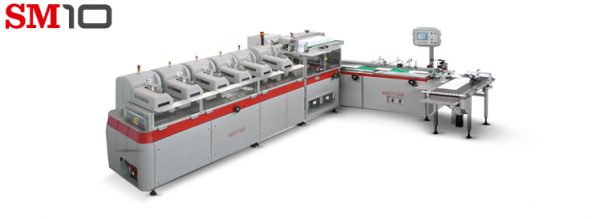
E&B works with Sitma, a specialist manufacturer of direct mail, post-press and packaging automation systems.
Sitma’s envelope enclosing solutions are designed for demanding mailing operations where reliable feeding, consistent production and efficient changeovers are important.
E&B’s existing envelope enclosing offering includes heavy-duty machinery intended for high-capacity production, with configurations that can incorporate complementary equipment such as collators, stackers and inserters.
This allows the enclosing process to be considered as part of a wider production system rather than simply an individual machine.
For customers reviewing their existing equipment, E&B can help assess the available Sitma configurations against the required envelope formats, inserts, production capacity and operating conditions.
Envelope Formats and Insert Requirements
Not every envelope enclosing machine can accommodate every mailing format.
The equipment must be specified around the physical characteristics of the envelope and its contents.
Envelope Dimensions
Envelope size affects the feeding, opening, insertion and discharge processes. The required envelope range should be confirmed before selecting machinery.
Paper Weight and Finish
The weight, stiffness and surface finish of documents can influence how reliably they are fed and handled.
Number of Inserts
Mailings containing several components may require additional feeding and gathering equipment.
Folded Documents
Where documents need to be folded before insertion, the folding arrangement must be compatible with the paper and finished envelope format.
Variable-Thickness Mailpieces
Mailings containing different numbers of sheets or inserts may require additional handling and control considerations.
Envelope Closure
The envelope's flap and sealing method must be compatible with the enclosing machinery. E&B can help customers assess these factors during the machine specification process.
Integrating Envelope Enclosing with Mailing and Printing Systems
Envelope enclosing is frequently one stage within a wider mailing operation.
A typical workflow might include:
Document Printing confirmed before selecting machinery.
Folding & Collation
Envelope Enclosing .
Sealing
Inspection
Stacking & Dispatch
Where variable information is required, the production process may also involve barcode reading, document matching or inkjet addressing.
The correct integration arrangement depends on the mailing format and existing production equipment.
E&B’s wider experience in direct mail, post-press machinery and industrial inkjet printing allows these requirements to be considered together.
For example, a mailing business may need to upgrade its enclosing equipment while retaining existing document production and downstream handling systems.
Another may need to introduce additional feeding or verification capabilities to support more complex personalised mailings.
Benefits of Automated Envelope Enclosing
Reduced Manual Inserting
Automatic enclosing reduces the need for operators to place documents into envelopes by hand. This can be particularly valuable for repetitive, high-volume mailing work.
Consistent Mailpiece Assembly
Automated feeding and insertion support a repeatable process, helping maintain consistent presentation across production runs.
Improved Production Capacity
Suitable equipment can increase the volume of mailpieces prepared within a given production period. Actual output depends on the application and machine configuration.
Support for Complex Mailings
Multiple feeders, collators and suitable control systems can support mailings containing several components.
More Efficient Changeovers
Where a business handles different envelope formats and jobs, appropriate changeover arrangements can help reduce non-productive time.
Integration with Existing Mailing Equipment
Envelope enclosing machinery can be combined with suitable folding, feeding, printing and downstream handling systems.
Envelope Enclosing vs Paper Wrapping
Envelope enclosing and paper wrapping are both used to prepare printed materials for mailing, but they are different processes.
Envelope enclosing places documents or other suitable materials inside a pre-formed envelope.
Paper wrapping forms a paper wrapper around a suitable printed product, such as a magazine, catalogue or mailing pack.
Envelope enclosing is commonly used for letters, statements and document-based mailings.
Paper wrapping is often considered for publications and other products that are better suited to being wrapped rather than inserted into a conventional envelope.
The correct choice depends on the product dimensions, thickness, presentation, postal requirements and production volumes.
E&B can help customers evaluate both technologies through its wider direct mail machinery portfolio.
Envelope Enclosing and Personalised Mail
Personalisation can add complexity to the mailing process.
A recipient may receive a specific letter, a different number of pages or a particular promotional insert.
Where these variations occur, the enclosing system may need to coordinate document feeding with the information used to prepare each mailing.
Depending on the equipment, barcode or other identification technologies may be used to support document tracking and verification.
For applications involving confidential or regulated correspondence, the required controls should be assessed carefully.
Automated enclosing can support these processes, but the complete workflow must be designed around the customer’s data, documents and quality requirements.
Refurbishment and Upgrading Existing Envelope Enclosing Machines
Businesses with established mailing operations may already have substantial investment in enclosing machinery.
Where equipment is still mechanically suitable, refurbishment or targeted upgrades may be worth considering.
E&B has an engineering facility in Petersfield specialising in machinery refurbishment and bespoke equipment.
Depending on the machine and its condition, refurbishment may involve cleaning, replacement components, mechanical overhaul or modifications to support specific production requirements.
This can offer an alternative to complete replacement where the existing machine remains appropriate for the work.
E&B can help assess whether refurbishment, modification or new machinery is the most suitable option.
How to Choose the Right Envelope Enclosing Machine
Selecting the right system starts with understanding the mailing operation.
Important questions include:
- What envelope sizes are required?
- How many inserts will each mailpiece contain?
- Are different paper weights or finishes involved?
- How frequently will jobs change?
- Is recipient-specific document matching required?
- Is automatic sealing required?
- What downstream stacking or sorting is needed?
- What level of operator involvement is acceptable?
- What documents or materials will be inserted?
- Will documents need to be folded?
- What production output is required?
- Will the number of inserted pages vary?
- Are barcode reading or verification systems needed?
- What existing equipment must be retained?
- What floor space is available?
Why Choose E&B for Envelope Enclosing Machinery?
E&B has extensive experience supplying machinery to the UK direct mail and post-press industries.
We work with mailing businesses to understand their production requirements, identify suitable machinery and consider how individual systems fit into the wider operation.
Through specialist partners including Sitma, and our own experience in machinery refurbishment, industrial inkjet printing and bespoke equipment, we can help customers assess both new installations and improvements to existing lines.
Our focus is on selecting machinery that supports reliable production, practical operation and the specific requirements of each mailing application.
Frequently Asked Questions About Envelope Enclosing Machines
What is an envelope enclosing machine?
What is the difference between an envelope inserter and an envelope enclosing machine?
Can envelope enclosing machines insert multiple documents?
Can envelope enclosing machines fold documents?
Are envelope enclosing machines suitable for high-volume direct mail?
Can envelope enclosing machines handle personalised mail?
Can an envelope enclosing machine automatically seal envelopes?
Can existing envelope enclosing equipment be refurbished?
What is the difference between envelope enclosing and paper wrapping?
Discuss Your Envelope Enclosing Requirements with E&B
Whether you are replacing an ageing envelope enclosing machine, increasing direct mail capacity or planning a new automated mailing line, E&B can help identify the appropriate solution.
Contact our team to discuss your envelope formats, inserts, production volumes and existing machinery.