
Automatic Tray Erecting Machines & Machinery
Automatic Tray erecting machines help manufacturers form consistent cardboard and corrugated Trays as part of an efficient packaging operation.
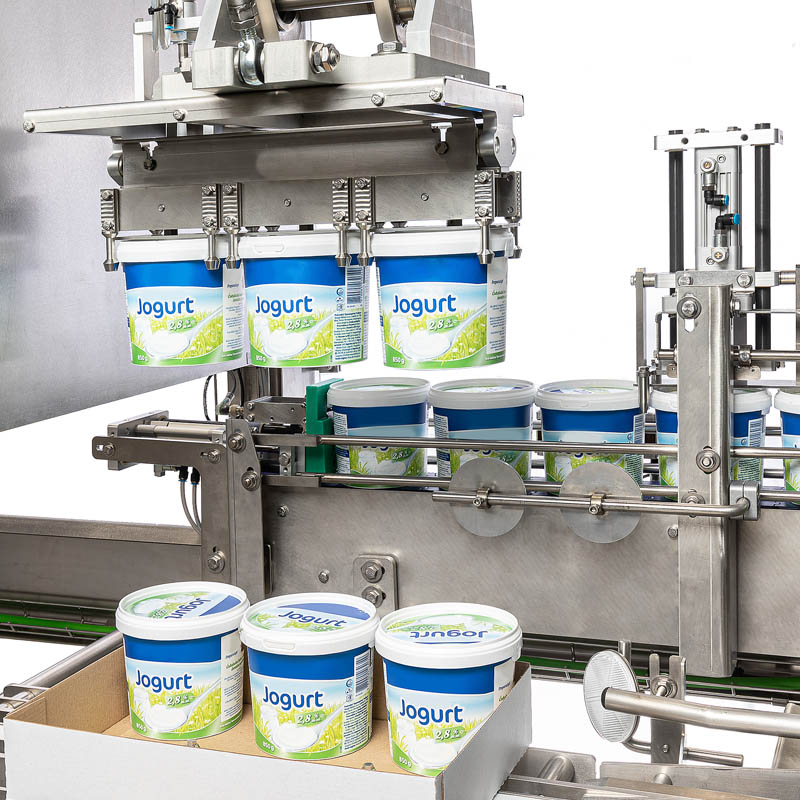
From product presentation and retail-ready packaging to protective Trays used in transport and distribution, automated Tray forming can reduce manual handling, improve consistency and support higher production outputs.
E&B supplies packaging machinery solutions for manufacturers looking to automate individual processes or develop more integrated production and end-of-line packaging systems.
We work with businesses to understand their Tray formats, products, required output and wider packaging requirements before helping identify the most appropriate machinery solution.
What Is a Tray Erecting Machine?
A Tray erecting machine automatically converts flat cardboard or corrugated blanks into formed Trays ready for product loading, filling or further packaging operations.
Depending on the equipment and Tray design, the process can involve feeding a flat blank, positioning and folding the material, forming the tray walls and securing the finished shape.
Some systems use adhesive to secure the Tray, while others work with mechanically locking Tray designs.
The resulting tray can then be transferred to a manual loading station or integrated with automated product handling and packing machinery.
Automatic tray erecting is particularly useful where manufacturers need repeatable tray dimensions, consistent presentation and a reliable supply of formed trays to downstream processes.
How Does an Automatic Tray Erector Work?
Although the precise process varies according to the machine and Tray format, a typical sequence includes:
The appropriate equipment depends on the blank design, material thickness, forming method, Tray dimensions and required production output.
For integrated lines, the speed and reliability of the Tray erecting process also need to match the requirements of the product loading and downstream packaging equipment.
Types of Trays Used in Automated Packaging
Different Tray designs serve different packaging requirements.
Corrugated Cardboard Trays
Corrugated Trays provide structural support and protection for products during handling, storage and distribution.
They are commonly used in secondary and transit packaging, particularly where products need to be grouped or transported together.
Retail-Ready and Shelf-Ready Trays
Retail-ready Trays are designed to support product presentation and handling at the point of sale.
Depending on the application, products may be packed directly into a display Tray that can be transferred from the outer packaging to a retail shelf.
Tray dimensions, opening style, strength and appearance are important considerations when specifying the equipment.
Die-Cut and Locking Trays
Die-cut blanks can incorporate tabs, slots and other features that allow Trays to be formed into specific shapes.
Some designs use mechanical locking rather than adhesive, although suitability depends on the material and required Tray strength.
Glued Trays
Certain Tray designs require adhesive to secure the corners or other folded sections.
The machine must be configured around the adhesive application, forming sequence and required production speed.
Benefits of Automatic Tray Erecting
Reduced Manual Handling
Automating Tray forming can reduce the repetitive manual work involved in assembling packaging.
This allows operators to focus on other production activities while supporting a more consistent supply of Trays.
Consistent Tray Formation
Automated equipment can help maintain consistent folding, positioning and finished Tray dimensions.
This is particularly important where Trays need to move reliably through subsequent loading, conveying or packing processes.
Improved Production Efficiency
A correctly specified Tray erecting machine can help reduce interruptions caused by manual Tray preparation and support more predictable production flow.
Integration with Existing Packaging Lines
Tray erecting machinery can be incorporated into wider packaging systems, allowing formed Trays to be transferred directly to suitable product loading or handling equipment.
Flexibility for Different Tray Formats
Depending on the machinery, changeover arrangements may allow different Tray sizes or formats to be produced.
The required range of formats should be established before equipment is specified.
Tray Erecting for Different Products and Industries
Tray erecting machinery is relevant wherever products need to be presented, grouped, protected or transported in formed cardboard packaging.
Food and Beverage
Corrugated and retail-ready Trays can be used to group packaged food and beverage products for handling, distribution and display.
Personal Care and Household Products
Trays can support the secondary packaging of bottles, cartons, containers and other packaged consumer products.
Pharmaceutical and Healthcare
Where suitable, formed Trays can support the handling and secondary packaging of healthcare products and packaged goods.
The machinery specification should reflect the applicable production, hygiene and traceability requirements.
Industrial and Consumer Goods
Corrugated Trays can be used for grouping, protecting and transporting a wide range of manufactured products.
The required Tray strength and design depend on product dimensions, weight and distribution conditions.
Integrating Tray Erecting with Case Packing and End-of-Line Automation
ray erecting machinery is often most valuable when considered as part of the wider packaging process.
Depending on the application, the process may involve:
Automated Tray handling can be combined with suitable conveyors, product grouping systems, robotic handling equipment and downstream packaging machinery.
For example, a manufacturer may need Trays to be formed and supplied directly to an automatic loading system. Another application may require a standalone tray erector supplying operators at a manual packing station.
The most appropriate arrangement depends on the product, production volume, available space and level of automation required.
E&B can help assess how Tray erecting fits into the wider packaging operation rather than considering the equipment in isolation.
Tray Erectors vs Case Erectors – What's the Difference?
Tray erecting and case erecting are related packaging processes, but they generally produce different packaging formats.
A Tray erector forms an open-topped or partially enclosed Tray, often used for product grouping, presentation or secondary packaging.
A case erector typically forms a corrugated shipping case or box that will subsequently be filled and closed.
The correct equipment depends on the required packaging format and how the product will be handled, stored, displayed or transported.
For manufacturers considering a complete secondary packaging solution, E&B can also advise on case erecting, case packing and case sealing machinery.
Tray Erecting and Sustainable Packaging
Many manufacturers are reviewing their packaging materials, pack dimensions and distribution requirements as part of wider sustainability programmes.
Cardboard and corrugated packaging can offer opportunities to use fibre-based materials, optimise packaging dimensions and improve material recovery, depending on the specific design and local recycling infrastructure.
However, the Tray must still provide adequate protection and perform reliably throughout the packaging process.
Changes to board grade, material thickness, recycled content or Tray design can affect folding, forming and structural performance.
For this reason, the Tray material and machinery should be considered together when evaluating alternative packaging formats.
E&B can help identify a configuration that supports reliable operation rather than simply selecting machinery based on its maximum rated speed.
How to Choose the Right
Tray Erecting Machine
Selecting the right equipment starts with understanding the packaging application.
Important considerations include:
These factors help establish the most appropriate machine configuration and how it should integrate with the wider packaging line.
Why Choose E&B for Tray Erecting Machinery?
E&B takes a consultative approach to packaging machinery selection.
We work with manufacturers to understand the packaging format, product characteristics, production requirements and wider automation needs before helping identify suitable equipment.
Our wider packaging machinery portfolio also allows Tray erecting to be considered alongside case packing, conveying, palletising and other end-of-line technologies.
This helps ensure that the chosen solution supports the complete packaging process rather than simply automating one individual task.
Frequently Asked Questions About Tray Erecting Machines
What is an automatic Tray erecting machine?
An automatic Tray erecting machine forms flat cardboard or corrugated blanks into finished Trays ready for product loading or further packaging operations.
What is the difference between a Tray erector and a case erector?
A Tray erector generally forms open-topped or partially enclosed Trays, while a case erector forms boxes or cases that are subsequently filled and closed.
Can Tray erecting machines handle different Tray sizes?
Some machines can accommodate multiple Tray dimensions or formats, subject to their design and changeover capabilities. The required size range should be confirmed when specifying the equipment.
Do Tray erecting machines use glue?
Some Tray designs require adhesive, while others use mechanical locking features. The forming method depends on the Tray design and machine configuration.
Can Tray erecting be integrated with automatic product loading?
Yes. Tray erecting machinery can be combined with suitable product handling and loading systems as part of an integrated packaging line.
What industries use Tray erecting machinery?
Applications include food and beverage, personal care, household products, healthcare, consumer goods and industrial packaging.
Can Tray erecting machinery work with recycled cardboard?
Some machinery can accommodate board containing recycled material, but compatibility depends on factors such as board grade, thickness, stiffness, Tray design and forming requirements.
What industries use automatic container unscramblers?
Bottle and container unscramblers are used across food and beverage, pharmaceutical, healthcare, cosmetics, personal care, household products and other manufacturing sectors.
Speak to E&B About Cartoning Machinery
Whether you’re introducing automated cartoning for the first time, replacing an existing machine or developing a fully integrated packaging line, E&B can help.
Talk to our team about your products, carton formats and production requirements and we’ll help identify the most appropriate cartoning solution.
Talk to E&B About Your Tray Erecting Requirements
Whether you are looking to automate manual tray assembly, improve consistency or integrate tray erecting into a wider packaging line, E&B can help assess the appropriate machinery and automation requirements.